

Randall’s Island Park’s Repository
The data repository for Randall’s Island Park serves as a resource hub – a compilation of the ecological and environmental monitoring and assessments performed on the island by the Alliance’s staff and community collaborators. Through this repository, researchers, students and community members can access detailed data sets, reports, and analyses, facilitating further research questions, informed decision-making, and strategic planning.
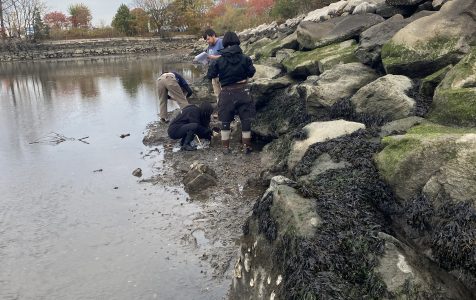
Partnering with Billion Oyster Project, RIPA staff and volunteers surveyed the Little Hell Gate Salt Marsh to identify the presence and abundance of eastern oysters (Crassostrea virginica).
2025
2024


The WATERS program provided paid, multi-year research and professional development opportunities for high school and college students from communities surrounding Randall’s Island. Through mentored field research, estuarine monitoring, and professional skill-building, interns conducted original ecological studies, contributed to ongoing Hudson River Estuary monitoring, and gained exposure to careers in environmental science and stewardship.
2025 - Salt Marsh Plant Viability
2025 - Marine Debris Dynamics
2025 - Bird Behavior Dynamics
2025 - Oyster Population and Survival

RIPA staff, in partnership with Dr. Ingwell from Purdue University, established the abundance of Squash Vine Borers on the squash crop at Randall's Island Urban Farm. The objective of this study was to understand the impact of the pest on a variety of squash crops based on abundance of adult moths and to explore the ability to manage the pest with a scented trap.
2024

Randall’s Island Urban Farm soil samples reveal insights into soil biodiversity. The data shows that while the diversity of bacteria and fungi remains consistent across farm sites, the composition however, differs between older and younger sites. These findings help us understand how microbial communities evolve over time, improving our knowledge of urban soil ecosystems.
2020

RIPA staff and interns conduct vegetation surveys (annual or every 2 years) in two restored salt marshes. The objectives of wetland vegetation monitoring on the island are to evaluate whether restoration efforts are providing habitat for macroinvertebrates and to detect shifts in plant community composition associated with improved salt marsh ecosystem function.
2019
2018

Effects of urbanization on the vertebrate scavenger community, their feeding behaviors, and ecosystem services scavengers provide is poorly understood. The authors studied vertebrate scavenger community and carcass removal rates along an urbanization gradient in New York State.

Thanks To Our Sponsors


